Daniel Bausch
About the developer
I was born in 1983 in Germany. My first computer was an old 286 with a Hercules graphics card and an amber monochrome monitor. Around 1992, when I was about nine years old, I asked my father for more games. He resisted buying them and said I could write my own instead. That one decision changed everything.
He taught me the basics in MS-DOS QBASIC — a language he barely knew himself. When I wanted more, he bought Turbo Pascal and taught me that too, a language he knew well from his own work as a software and electronics developer. I also worked through a thick Pascal tutorial book on my own, covering everything from business software to graphics. I was a primary school kid teaching himself computer science from a book.
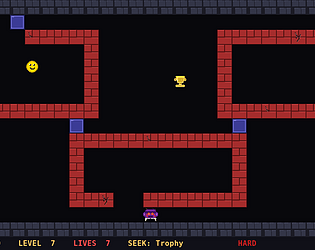
UGLI was the result. I wrote it first in QBASIC, wasn't satisfied, rewrote it in Pascal, and eventually sold around fifteen to twenty copies to classmates and friends. It ran in text mode — walls and player drawn from ASCII characters — on a screen that could only show shades of brown and yellow. I didn't see what it looked like in colour until much later, when I finally got a colour monitor.
UGLI never really left me. It represents something I keep returning to: not accepting what's given, but building something from scratch. Being self-taught, self-employed, self-made. That's what UGLI is — my story, compressed into a maze-chase game.
UGLYCRAFT is the remake, written thirty years later in Python with the help of an AI coding assistant. Family life and a day job as a developer at a card payment company don't leave much time for side projects, so the AI made it possible to move faster than I could alone. The ideas are still mine. And as with the Pascal book at age nine, I found myself learning along the way — this time about how to work effectively with a new kind of tool.